
Turmeric Supplements NZ: Evidence-Based Support for Healthy Ageing
Evidence checked by the Lifeguard Health team • Last updated: 23 February 2026
Turmeric has moved well beyond the spice rack in New Zealand.
What was once primarily a coloring agent for curries and rice dishes is now one of the most talked-about natural health ingredients among Kiwis looking for joint comfort, immune support, and a proactive approach to ageing well.
Quick next step
Support your body every day
Lifeguard Essentials is a doctor-formulated daily base for adults 45+, supporting energy, recovery and everyday resilience.
Shop Lifeguard EssentialsFree • Instant results
If you’ve noticed stiffer mornings, slower recovery after gardening or a weekend hike, or simply want to support your body as the decades tick by, turmeric supplements may have crossed your radar.
This guide breaks down what the science actually says, how to choose quality products in the NZ market, and where turmeric fits into a broader healthy-ageing strategy.
On this page
Key Takeaways
- Turmeric supplements deliver concentrated curcumin—typically 500–1,000 mg per daily dose—far exceeding what you’d get from food alone, making them a practical choice for targeted joint and inflammation support.
- Bioavailability is the critical factor: curcumin on its own is poorly absorbed, so look for NZ products that include black pepper extract (piperine) or lipid-based delivery systems to maximise effectiveness.
- Adults 40+ commonly use turmeric for joint comfort and systemic inflammation, but supplements work best as part of a broader approach that includes movement, sleep, and balanced nutrition—not as a standalone “fix.”
- Quality varies significantly across brands, so prioritise products with standardised curcumin content, transparent labelling, and NZ or Australian manufacturing standards.
Recommended: Lifeguard Essentials
Your daily foundation for healthy ageing—designed to support energy, recovery, and resilience from the inside out.
Why this formula
- Complements an anti-inflammatory lifestyle: supports whole-body resilience beyond any single ingredient.
- Turmeric equivalent to 50mg curcuminoids
- Evidence-led essentials:
- Simple daily routine: easy to stick with—consistency is what drives long-term results.
What is turmeric?
Traditional and Culinary Uses
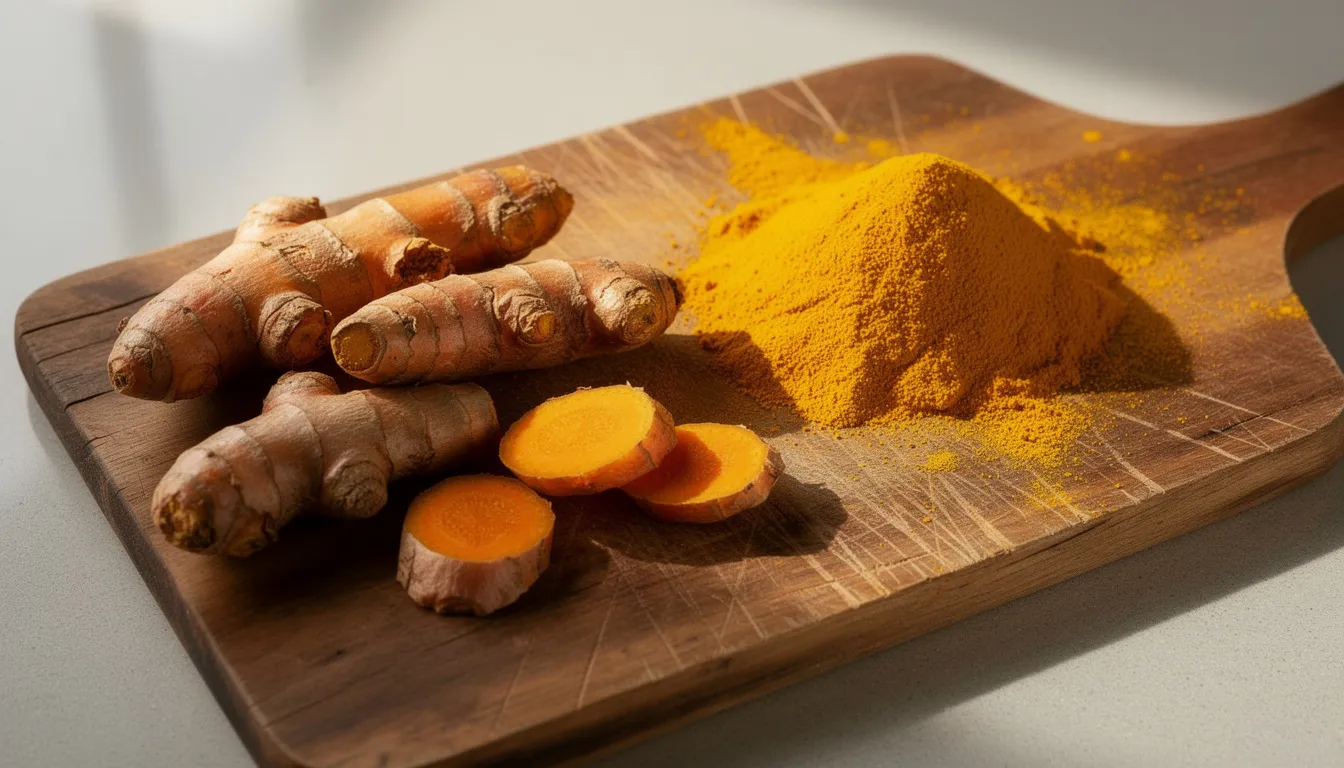
Turmeric (Curcuma longa) is a bright yellow-orange rhizome belonging to the ginger family.
The plant has been cultivated for thousands of years across South and Southeast Asia, where it serves as both a culinary staple and a cornerstone of traditional medicine systems.
If you’ve ever noticed that deep golden colour in a curry, you’ve seen turmeric at work.
Traditional uses in Ayurveda and traditional Chinese medicine span centuries—practitioners have long recommended turmeric for skin conditions, digestive complaints, joint discomfort, and respiratory health.
Modern scientific interest has picked up these threads, with researchers investigating whether the active compounds in turmeric can deliver measurable benefits in clinical settings.
Kiwis increasingly add turmeric to curries, golden milk lattes, smoothies, and even coffee. Turmeric is also commonly added to beverages such as milk, tea, and juice for flavor and color enhancement.
These culinary uses are enjoyable and contribute to overall wellbeing, but they rarely deliver the curcumin levels that have been studied for specific health outcomes.
That’s where supplements enter the picture.
Turmeric is widely used as a flavor enhancer and a coloring agent for beverages and foods.
Common dishes where turmeric is used include soups, broths, stews, curries, rice, and sauces.
It can also be used to color rice, lentil, dahl, and bean dishes. For example, a pinch of saffron or turmeric can be added to rice to enhance both color and flavor, bringing a touch of luxury and vibrancy to the meal.
The earthiness that turmeric and related spices like cumin bring to dishes adds depth and complexity, while the bright color and flavor of turmeric add life to recipes.
Important safety note
Who should avoid turmeric (or check with a clinician first)?
- If you take blood thinners/anticoagulants (or have a bleeding disorder).
- If you take diabetes medication or are managing blood sugar closely.
- If you’re scheduled for surgery: stop supplements in advance and follow your clinician’s advice.
- If you’re pregnant or breastfeeding (supplement doses—food amounts are different).
- If you have gallbladder issues or bile duct obstruction (turmeric may worsen symptoms for some people).
When in doubt: stick to food amounts or talk to your pharmacist/GP—especially if you take prescription meds.
Turmeric in NZ Stores
In New Zealand, turmeric is widely available. You’ll find fresh root in the produce section at supermarkets like Pak’nSave, Countdown, and New World. Ground turmeric sits alongside ground cumin, coriander, cinnamon, and other spices in the baking aisle.
Common ways to use turmeric
- Add to cooking: soups, curries, stews, roasted veggies, and rice dishes.
- Stir into warm drinks: “golden milk” (warm milk/plant milk + turmeric + cinnamon/ginger) or tea.
- Blend into smoothies: a small pinch with banana/berries + yoghurt or plant-based protein.
- Mix into breakfast: scrambled eggs/tofu, oats, or yoghurt (start with a small amount).
- Use as a spice rub: fish, chicken, lamb, or tofu with black pepper, garlic, and olive oil.
Why food alone rarely hits study doses
- Most research uses concentrated extracts: many clinical studies use standardised curcumin/curcuminoid extracts, not culinary turmeric.
- Curcumin content in food is relatively low: turmeric powder typically contains only a small percentage of curcumin, so you’d need unrealistically large amounts to match study-style doses.
- Absorption is naturally limited: curcumin is poorly absorbed on its own, which is why many supplements use absorption-enhancing approaches (e.g., taken with fat, or formulated for bioavailability).
- Consistency is hard: even if you love turmeric, day-to-day intake varies, making it difficult to achieve a reliable “therapeutic” amount.
Practical takeaway: Enjoy turmeric as part of a healthy diet—but if you’re targeting specific outcomes studied in clinical trials, those results typically come from standardised extracts and bioavailability-focused formulations.
Scientific Interest and Modern Use
At Lifeguard Health, we focus on turmeric and other plant-based ingredients as part of a broader healthy-ageing approach for adults over 40 in NZ.
Our philosophy centres on evidence-based formulations that complement—rather than replace—good food and lifestyle habits.
Free checklist
Want a 30-second turmeric quality checklist?
- What dose range to look for
- Which absorption boosters matter
- Red flags on labels
Takes 30 seconds • Instant delivery
Curcumin: The Active Compound Inside Turmeric
Curcumin Content Comparison
When researchers talk about turmeric’s health potential, they’re usually talking about curcumin.
This polyphenol compound gives turmeric its distinctive colour and accounts for much of the plant’s researched activity.
Here’s a practical comparison that matters when you’re choosing supplements:
| Form | Typical curcumin content |
|---|---|
| Fresh turmeric root | ~0.03%–0.06% curcumin (by weight) |
| Ground turmeric powder | ~2%–5% curcumin (by weight) |
| Curcumin extract (standardised) | ~500 mg–1,000 mg curcumin per serving (typical supplement range) |
Key Health Properties
Laboratory and early human research has identified several key properties of curcumin: antioxidant properties that help neutralise free radicals, anti-inflammatory activity that may modulate pathways involved in chronic low-grade inflammation, and potential support for joint comfort and metabolic health markers.
Clinical Research Overview
Clinical studies investigating these benefits commonly use doses of 500–1,500 mg curcumin per day—far more than you’d reasonably consume through cooking alone.
This is why standardised extracts in capsule form have become the preferred delivery method for people seeking targeted support.
A note of realism: many trials to date have been small or short-term.
Curcumin is best viewed as a supportive tool rather than a standalone treatment for any specific condition.
It’s one piece of a larger puzzle.
How Turmeric Supplements Work: Inflammation, Joints, and Healthy Ageing
Inflammation and Ageing
As we age, our bodies tend to accumulate low-grade, chronic inflammation—sometimes called “inflammageing.”
This isn’t the acute inflammation you experience after stubbing your toe.
Instead, it’s a persistent, subtle process linked to joint stiffness, cardiovascular strain, metabolic changes, and general feelings of reduced vitality.
Curcumin appears to interact with several inflammatory pathways at the cellular level. Research suggests it may help modulate molecules like NF-κB and enzymes like COX-2, which play roles in inflammatory responses.
It also demonstrates antioxidant activity, helping to balance oxidative stress that accumulates over time.
Joint and Exercise Support
What do human studies suggest? Here’s a concise summary:
- Joint discomfort and osteoarthritis: Small trials comparing curcumin (500–1,000 mg daily) to NSAIDs have shown similar improvements in pain and function scores for some participants, though results vary.
- Exercise recovery: Some research indicates curcumin may help reduce muscle soreness and support faster recovery after intense physical activity.
Metabolic Health
-
Metabolic markers: Early studies suggest potential benefits for blood lipids and insulin sensitivity, though these findings need larger trials for confirmation.
For NZ adults over 40 who notice stiffer joints, slower recovery after a bush walk, or the accumulated effects of stress and lifestyle factors, these findings offer a plausible rationale for considering curcumin supplementation.
At Lifeguard Health, we position turmeric as one component of a broader healthy-ageing strategy.
Movement, quality sleep, balanced nutrition, and targeted micronutrients all work together.
No single ingredient—however impressive—replaces the fundamentals.
Tip: If you’re on medications or have surgery booked, talk to your pharmacist or GP about the safest next step.
A simple daily base
Support your body every day
Lifeguard Essentials is a doctor-formulated daily base for adults 45+, supporting energy, recovery and everyday resilience alongside good food and movement.
Shop Lifeguard EssentialsFree • Instant results
Try Lifeguard Essentials — your first month free
A simple, doctor-formulated daily foundation for healthy ageing, vitality and everyday wellbeing. Start your first month free and pay only shipping.
Claim Your First Free MonthFirst month free offer applies to eligible subscription orders. Shipping charges apply. Always read the label and use only as directed.
Related guide: Healthy Ageing and Inflammatory Balance: A Guide for Adults Over 40