
Vitamin D Supplement NZ: Essential Guide for Over 45s
New Zealand's geographic location presents a unique challenge when it comes to maintaining adequate vitamin D levels, particularly for adults over 45. While our clean air and beautiful landscapes make outdoor activities appealing, many Kiwis struggle to achieve sufficient vitamin D through sun exposure alone, especially during winter months. Understanding the role of vitamin D supplement NZ options becomes increasingly important as we age, when our bodies become less efficient at producing and utilizing this essential nutrient. For those navigating healthy ageing, ensuring optimal vitamin D status can make a significant difference to bone health, immune function, and overall wellbeing.
Why Vitamin D Matters More After 45
Vitamin D operates as both a nutrient and a hormone, playing crucial roles throughout the body that become even more significant with age. Our skin's ability to synthesize vitamin D from sunlight decreases by approximately 50% between ages 20 and 70, creating a widening gap that diet and supplements must fill.
The Ageing Factor
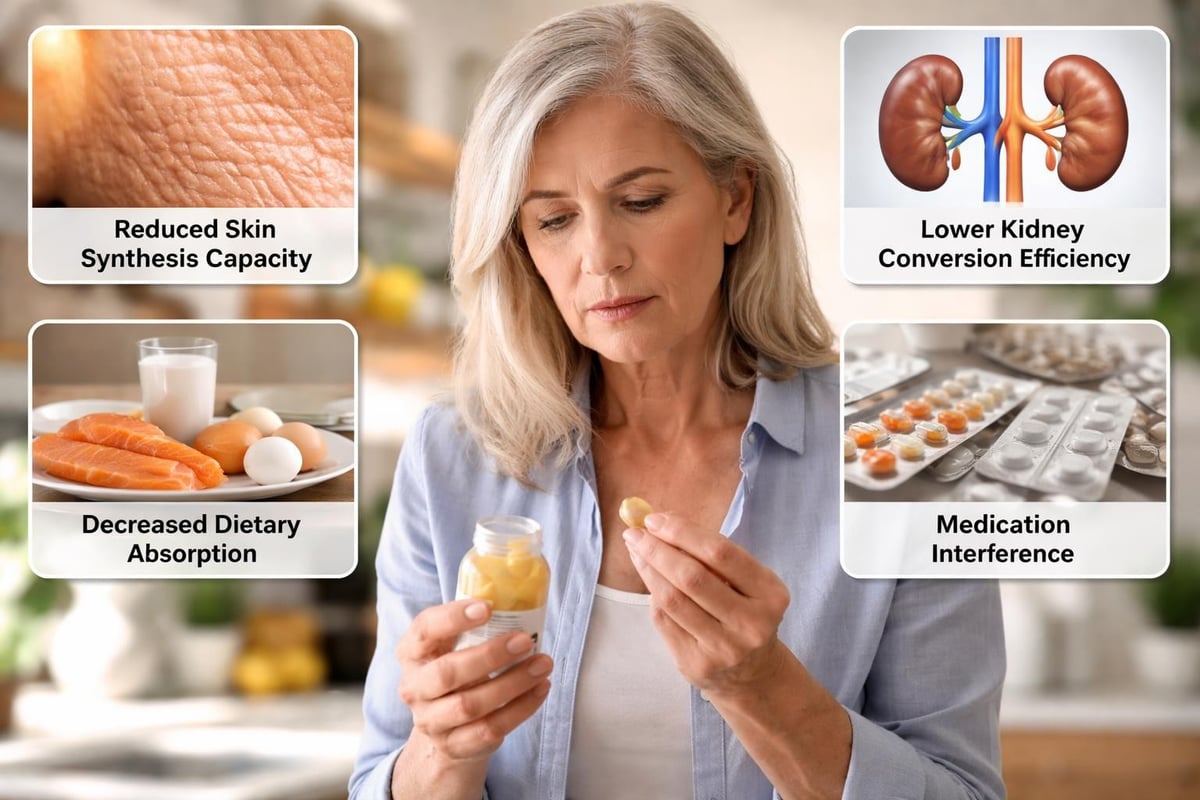
Several physiological changes affect vitamin D status as we mature:
- Reduced skin synthesis: Older skin contains less 7-dehydrocholesterol, the precursor needed for vitamin D production
- Decreased kidney function: Converting vitamin D to its active form becomes less efficient
- Lower dietary absorption: Age-related changes in gut function can impair nutrient uptake
- Increased indoor time: Retirement and mobility changes often mean less outdoor exposure
- Medication interactions: Common medications like statins and corticosteroids can affect vitamin D metabolism
Research examining vitamin D deficiency, supplementation, and testing practices in New Zealand highlights how widespread insufficiency remains across different population groups. For adults over 45, maintaining adequate levels requires deliberate attention to supplementation strategies.
Key Health Benefits
The evidence supporting vitamin D's role in healthy ageing continues to expand. Bone health remains the most established benefit, with vitamin D essential for calcium absorption and bone mineralization. Without adequate levels, osteoporosis risk increases substantially, particularly in postmenopausal women.
Beyond bones, vitamin D influences immune system regulation, muscle strength, cardiovascular function, and cognitive health. The connection between the immune system and ageing's big diseases underscores why maintaining optimal vitamin D status matters for disease prevention.
Understanding Vitamin D Deficiency in New Zealand
New Zealand's latitude places most of the country below the threshold for year-round vitamin D synthesis from sunlight. Between April and September, UVB radiation is insufficient for skin to produce vitamin D, even on sunny days.
| Season | Vitamin D Synthesis | Risk Level |
|---|---|---|
| Summer (Dec-Feb) | Adequate with 10-15 min sun exposure | Low |
| Autumn (Mar-May) | Declining, insufficient by late April | Moderate |
| Winter (Jun-Aug) | Negligible to none | High |
| Spring (Sep-Nov) | Gradually increasing from late October | Moderate |
The Ministry of Health guidelines on vitamin D and sun exposure acknowledge this seasonal variation while balancing skin cancer prevention. This creates a delicate balance where many New Zealanders inadvertently become deficient while protecting themselves from UV damage.
Who Needs Vitamin D Supplement NZ Solutions Most
Certain groups face elevated deficiency risk:
- Adults over 65: Combined effects of reduced synthesis and absorption
- People with limited sun exposure: Those who work indoors or have mobility limitations
- Individuals with darker skin: Higher melanin levels reduce vitamin D production
- Those with malabsorption conditions: Crohn's disease, celiac disease, or gastric bypass surgery
- People taking certain medications: As mentioned in interactions above
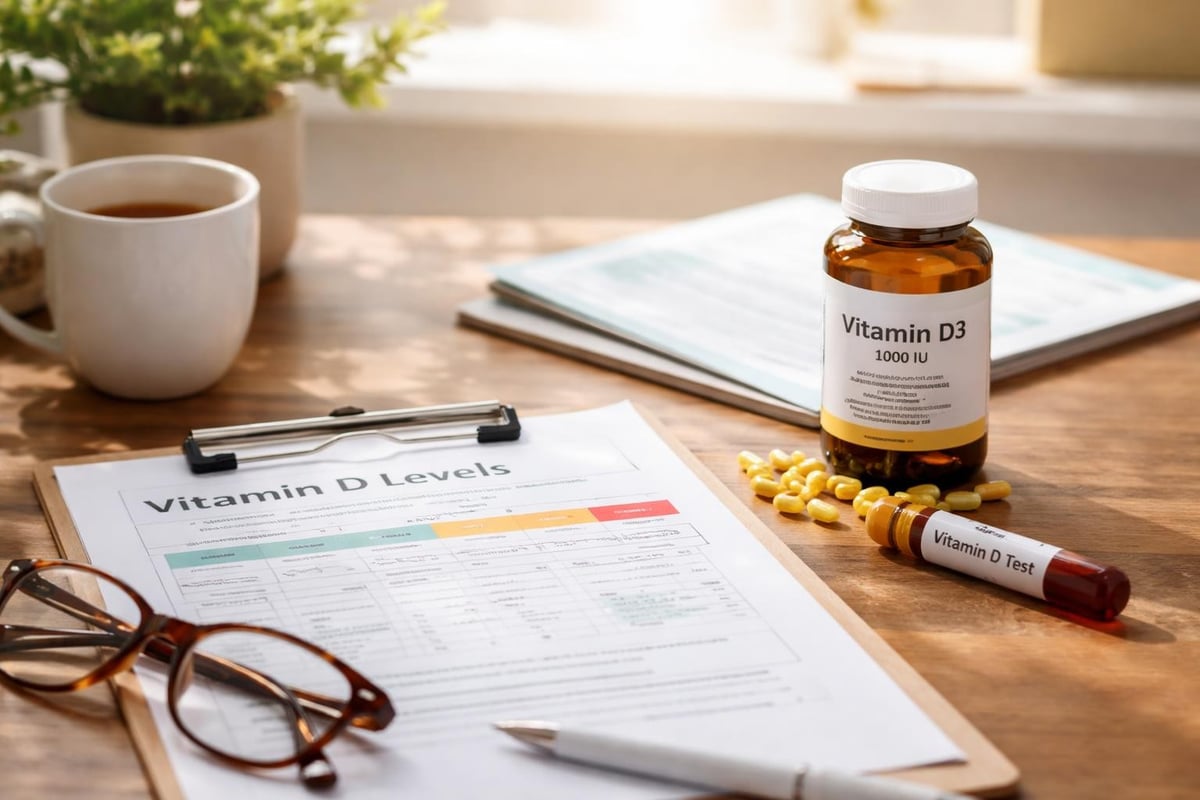
Testing vitamin D levels through a simple blood test (measuring 25-hydroxyvitamin D) provides definitive answers. Most experts recommend levels between 50-125 nmol/L for optimal health, though recommendations continue to evolve based on emerging research.
Choosing the Right Vitamin D Supplement NZ Product
Not all vitamin D supplements deliver equal benefits. Understanding the differences helps you make informed choices for your health investment.
Vitamin D2 vs D3
Vitamin D3 (cholecalciferol) is the form your skin produces naturally and the type found in animal-based foods. Colecalciferol supplements are widely recognized as more effective than vitamin D2 at raising and maintaining blood levels. Vitamin D3 increases 25-hydroxyvitamin D concentrations approximately 87% more effectively than equivalent doses of vitamin D2.
For this reason, quality vitamin d supplement nz products, including those formulated by healthcare professionals, predominantly use vitamin D3. When selecting supplements designed for people over 45, D3 should be your first choice.
Dosage Considerations
The appropriate dose depends on several factors including current vitamin D status, age, weight, and sun exposure patterns. Vitamin D supplements for adults in New Zealand typically range from 1,000 IU to 4,000 IU daily.
General guidelines for adults over 45:
- Maintenance dose: 1,000-2,000 IU daily for those with some sun exposure
- Therapeutic dose: 2,000-4,000 IU daily for those with limited sun exposure or confirmed deficiency
- High-dose correction: 50,000 IU weekly for 6-8 weeks under medical supervision for severe deficiency
Recent discussions at the Medicines Classification Committee have addressed recommended daily dose limits and classification standards. Working with healthcare providers ensures doses align with individual needs while remaining within safe parameters.
Forms and Formulations That Work
Modern vitamin d supplement nz products come in various delivery systems, each with distinct advantages.
Capsules and Tablets
Traditional forms remain popular due to convenience and precise dosing. Fat-soluble vitamin D absorbs best when taken with meals containing dietary fat. Capsules often include oil-based carriers that enhance bioavailability without requiring specific meal timing.
Liquid Drops
Liquid vitamin D3 offers flexible dosing and easier swallowing for those who struggle with pills. This format suits people who need customized doses or prefer adding supplements to food or beverages. Absorption rates match or exceed capsule forms when properly formulated.
Combination Formulations
Many evidence-based supplements pair vitamin D with complementary nutrients. Vitamin K2 works synergistically with vitamin D for bone health, directing calcium to bones rather than soft tissues. Magnesium is essential for converting vitamin D to its active form. Premium formulations like Lifeguard Essentials combine these cofactors for comprehensive support tailored to mature adults.
| Feature | Capsules | Liquid Drops | Combination Products |
|---|---|---|---|
| Dosing precision | High | Adjustable | High |
| Ease of use | Very easy | Moderate | Very easy |
| Absorption | Good with meals | Excellent | Enhanced with cofactors |
| Travel convenience | Excellent | Moderate | Excellent |
| Cost effectiveness | Good | Variable | Better value for multiple nutrients |
Quality Standards and Regulation
The supplement industry in New Zealand operates under specific regulatory frameworks, though uncertainty over regulations persists according to consumer advocacy groups. Understanding quality markers helps identify trustworthy vitamin d supplement nz options.
What to Look For
Premium supplements manufactured in New Zealand follow Good Manufacturing Practice (GMP) standards and undergo independent testing. Key quality indicators include:
- Third-party testing: Verification of potency and purity
- Clear labeling: Exact vitamin D3 content per serving
- Expiration dates: Ensures potency throughout shelf life
- Professional formulation: Products designed by qualified healthcare practitioners
- Traceable sourcing: Transparent ingredient origins
Products formulated by experienced clinicians, such as those developed by Dr Roderick Mulgan at Lifeguard Health, incorporate clinical insights from decades of medical practice. This professional oversight ensures formulations address real-world needs of the target demographic.
Avoiding Common Pitfalls
Less scrupulous manufacturers may use inadequate doses, inferior forms, or lack proper quality control. Warning signs include:
- Suspiciously low prices that seem too good to be true
- Absence of specific vitamin D form (D2 vs D3)
- Vague or incomplete ingredient lists
- Unverifiable manufacturer claims
- No contact information or unclear company origins

Integrating Vitamin D Into Your Health Strategy
Successful supplementation extends beyond simply taking a pill. Strategic integration maximizes benefits while minimizing potential issues.
Timing and Consistency
Morning intake with breakfast works well for most people, establishing a routine that's easy to remember. Taking vitamin D with your largest meal of the day optimizes absorption since dietary fat enhances uptake of this fat-soluble nutrient.
Consistency matters more than perfection. Missing occasional doses won't derail progress, but regular daily intake maintains stable blood levels. Setting phone reminders or using pill organizers helps establish habits.
Seasonal Adjustments
Some New Zealanders reduce supplementation during summer months when sun exposure increases, though this requires careful consideration. Fair-skinned individuals might achieve adequate synthesis with 10-15 minutes of midday sun on exposed skin several times weekly. However, those over 65 or with darker skin may still benefit from year-round vitamin d supplement nz products even with regular outdoor activity.
Monitoring and Testing
Baseline testing before starting supplementation establishes your starting point. Follow-up testing after 3-4 months confirms whether your dose achieves target levels. Annual monitoring thereafter ensures you maintain optimal status while avoiding excessive accumulation.
Blood tests measuring 25-hydroxyvitamin D cost approximately $30-50 when ordered through your GP. This modest investment provides valuable data for dose optimization.
Combining Vitamin D with Complementary Nutrients
Vitamin D doesn't work in isolation. Several nutrients interact synergistically to support healthy ageing outcomes.
The Vitamin D-K2-Magnesium Triangle
These three nutrients form an interconnected system for bone and cardiovascular health:
- Vitamin K2: Activates proteins that bind calcium, directing it to bones and teeth while keeping it out of arteries
- Magnesium: Required for vitamin D activation and calcium regulation, plus supports hundreds of enzymatic reactions
- Vitamin D: Enhances calcium absorption and supports immune function
Comprehensive formulations addressing multiple nutritional needs offer convenience and ensure balanced intake. The silent inflammation that often accompanies ageing may benefit from this multi-nutrient approach.
Immune Support Synergies
Vitamin D plays crucial roles in immune regulation, particularly relevant given increased infection vulnerability with age. Pairing vitamin D with other immune-supporting nutrients creates robust defense systems. Products like Lifeguard Immune combine vitamin D with complementary ingredients specifically chosen for mature immune systems.
Practical Implementation for Over-45s
Translating knowledge into action requires practical strategies suited to your lifestyle and health goals.
Starting Your Supplement Routine
Step 1: Get baseline testing to establish current vitamin D status Step 2: Choose a high-quality vitamin D3 supplement appropriate for your needs Step 3: Start with recommended doses, typically 1,000-2,000 IU daily Step 4: Take with a meal containing healthy fats for optimal absorption Step 5: Retest after 3 months to assess response and adjust if needed
Lifestyle Factors That Support Vitamin D Status
Supplementation works best alongside supportive lifestyle choices:
- Moderate sun exposure: Aim for 10-15 minutes on arms and legs during appropriate months, balancing vitamin D production with skin cancer prevention
- Maintain healthy weight: Vitamin D is fat-soluble and can be sequestered in adipose tissue, reducing bioavailability in overweight individuals
- Support gut health: A healthy digestive system optimizes nutrient absorption
- Regular physical activity: Weight-bearing exercise works synergistically with vitamin D for bone health
- Adequate dietary fat: Include sources like olive oil, avocados, nuts, and fatty fish with supplements
When to Consult Healthcare Providers
While vitamin D supplements are generally safe, certain situations warrant professional guidance:
- Pre-existing kidney or liver conditions
- History of kidney stones or hypercalcemia
- Taking medications that interact with vitamin D
- Planning to exceed 4,000 IU daily
- Experiencing symptoms potentially related to deficiency (bone pain, muscle weakness, frequent infections)
The Economic and Health Value Proposition
Investing in quality vitamin d supplement nz products delivers measurable returns through reduced health risks and improved wellbeing.
Cost-Benefit Analysis
| Aspect | Annual Cost | Potential Savings/Benefits |
|---|---|---|
| Quality vitamin D supplement | $60-150 | Fracture prevention ($15,000+ per hip fracture) |
| Annual vitamin D testing | $60-100 | Dose optimization, avoiding deficiency complications |
| Comprehensive formula | $300-600 | Multiple nutrients, convenience, synergistic benefits |
| Total Investment | $420-850 | Reduced illness, better quality of life, independence |
The relatively modest cost of supplementation pales compared to potential healthcare expenses from deficiency-related conditions. Beyond financial considerations, maintaining independence, mobility, and vitality through healthy ageing represents invaluable quality-of-life benefits.
Long-Term Health Investment
Viewing vitamin D supplementation as preventive healthcare rather than reactive treatment shifts perspective. By age 45, many people have experienced decades of suboptimal vitamin D status. Correcting this deficit and maintaining healthy levels may help prevent or delay:
- Osteoporosis and fractures
- Muscle weakness and falls
- Immune dysfunction and increased infection rates
- Potential cardiovascular complications
- Cognitive decline
The emerging understanding of food as medicine extends to targeted nutritional supplementation when diet and lifestyle alone prove insufficient.
Making Informed Decisions
The abundance of vitamin d supplement nz options requires discernment. Prioritize products from established companies with transparent practices, professional formulation, and commitment to quality.
New Zealand-made supplements offer advantages including local manufacturing oversight, formulations designed for our unique latitude and population needs, and support for domestic health innovation. Products specifically developed for people over 45 address the distinctive nutritional requirements of healthy ageing rather than applying one-size-fits-all approaches.
Research-backed formulations that combine clinical expertise with quality ingredients provide confidence that your supplement investment supports genuine health outcomes. Whether choosing standalone vitamin D or comprehensive formulations, alignment with your individual health status, goals, and values guides optimal selection.
The journey toward healthy ageing benefits from proactive nutritional support. Understanding vitamin D's critical roles, New Zealand's unique challenges, and quality supplementation options empowers informed decisions that support vitality, independence, and wellbeing throughout your later decades.
Maintaining optimal vitamin D levels represents a cornerstone of healthy ageing, particularly in New Zealand where seasonal limitations and changing physiology create genuine supplementation needs for adults over 45. Quality matters when selecting vitamin d supplement nz products, as does professional formulation that addresses the specific requirements of mature adults. Lifeguard Health provides expertly formulated supplements designed by Dr Roderick Mulgan specifically for people navigating the nutritional challenges of healthy ageing, combining clinical insight with New Zealand manufacturing standards to support your wellbeing journey.