Up at 2am: Why You Wake in the Night – And How to Drift Back to Sleep
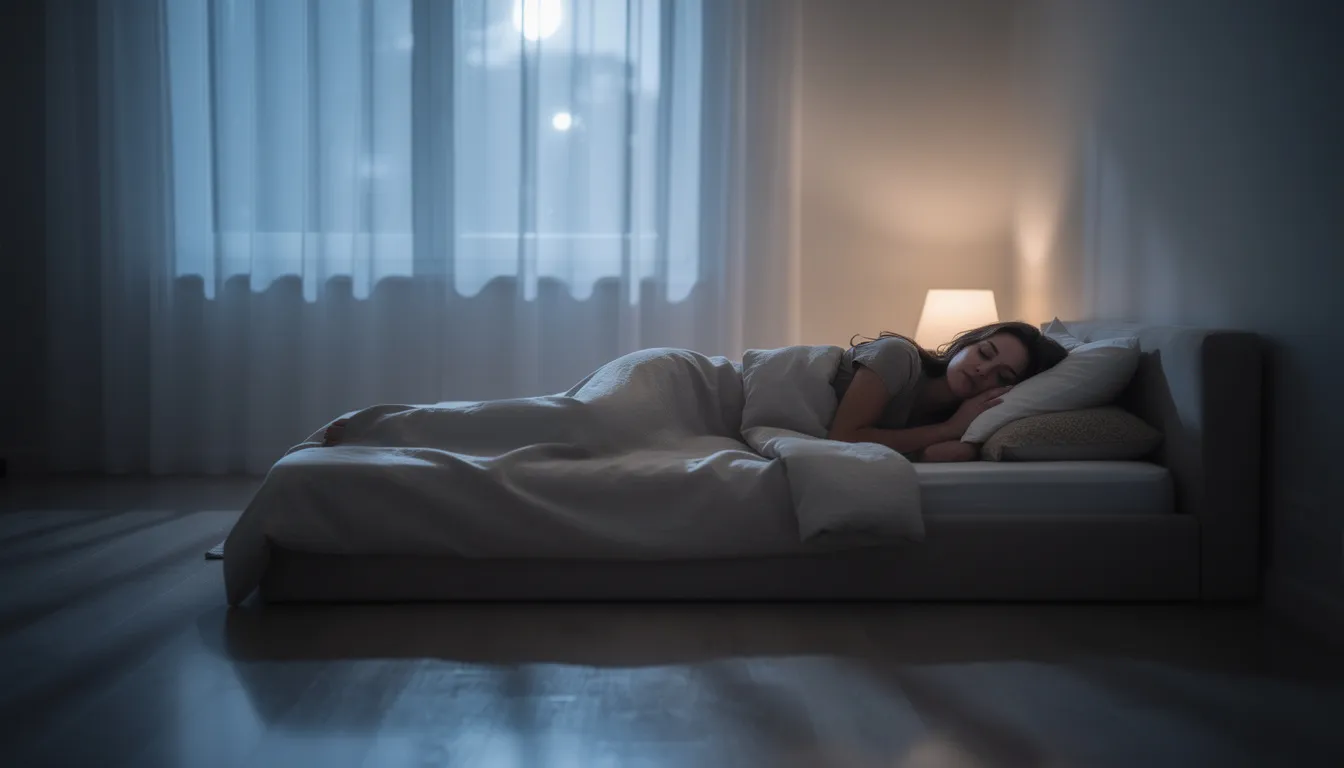
It’s 2:07am. You know this because you’ve already checked the clock twice.
The house is silent, your partner is breathing steadily beside you, and yet here you are—mind suddenly alert, body restless, staring at the ceiling in suburban Auckland wondering why this keeps happening.
If this sounds familiar, you’re far from alone.
Many people experience trouble sleeping, especially when waking up at 2am becomes a regular occurrence.
Waking in the middle of the night, particularly between 1am and 3am, is one of the most common sleep complaints among adults over 40.
In fact, waking up in the middle of the night—known as nocturnal awakening—is common, with studies showing that 35.5% of people wake up at least three times per night.
And while a brief awakening is perfectly normal, lying wide awake for 30 minutes or more, night after night, signals something worth addressing.
Waking Up at 2am: What’s Going On?
Picture a 52-year-old New Zealander.
She went to bed at 10:30pm feeling reasonably tired.
Sleep came easily enough.
But now, at 2:07am, she’s suddenly awake—not groggy, not half-asleep, but fully alert.
The digital clock glows in the darkness. She knows she shouldn’t look at it, but she does anyway.
This pattern has a name: sleep maintenance insomnia. It’s sometimes called “middle insomnia” because it strikes in the middle of the night rather than at bedtime.
Sleep maintenance insomnia is just one of several sleep issues that can disrupt your rest, especially as we age.
And it becomes increasingly common as we age, particularly from our 40s onward.
Here’s what’s happening beneath the surface.
In the first half of the night, your body prioritises deep sleep—the restorative stage when tissues repair and growth hormone releases.
But as night progresses, sleep becomes lighter.
Your sleep cycles shift toward more REM sleep and lighter non-REM stages.
Meanwhile, cortisol (your stress hormone) begins its natural pre-dawn rise waking up at 2am or close to it.
This combination—lighter sleep plus rising cortisol—creates a vulnerable window.
Any stress, pain, noise, or worry can snap you from drowsy to fully awake in moments.
Stress and anxiety are common contributors to maintenance insomnia, as they can keep the mind active and prevent falling back asleep after waking.
At Lifeguard Health, we see this pattern frequently among our community of adults focused on healthy ageing.
Our approach isn’t about quick-fix sleeping pills.
It’s about understanding what’s disrupting your nighttime sleep and making practical changes—alongside evidence-based nutritional support when appropriate.
Prefer a non-sedating approach?
If you’re waking at 2–3am and want structured, non-sedating support designed for adults 45+, you can trial our monthly plan first.
Start my free month (pay $7.95 shipping)What Is Sleep-Maintenance (Middle) Insomnia?
Sleep maintenance insomnia is characterized by difficulty staying asleep—you can fall asleep without too much trouble, but you struggle to remain asleep through the night.
You might wake at 2am, 3am, or multiple times, finding it difficult to get back to sleep once you’re awake.
This is different from sleep onset insomnia, where the problem is trouble falling asleep in the first place—you lie in bed at 10pm or 11pm, unable to drift off for an hour or more.
Many people experience a frustrating combination: asleep by 10:30pm, wake up at 2am, finally dozing off around 4am, then dragged from sleep by the alarm clock at 6am.
The result? You wake feeling unrefreshed, even though you technically spent eight hours in bed.
Getting enough sleep is essential for feeling rested and functioning well during the day.
Common symptoms of maintenance insomnia include lying awake with racing thoughts, repeatedly checking the time, feeling tense or frustrated in bed, and dreading how exhausted you’ll feel tomorrow.
Some people describe their mind as “switching on” the moment they wake—suddenly replaying the day’s events or rehearsing tomorrow’s challenges.
When this pattern becomes chronic, the effects extend beyond daytime sleepiness.
Poor sleep is linked with mood disorders, heightened anxiety, raised blood pressure, and reduced immune resilience.
Understanding the immune-sleep connection makes it clear that sleep deprivation doesn’t just make you tired—it affects virtually every system in your body.
Tracking your sleep patterns in a sleep diary can help identify issues related to sleep maintenance insomnia and improve your overall sleep efficiency, especially when you’re also aware of common sleep disruptors over 40 that might be affecting your nights.
Sleep Apnea and Night Waking
Sleep apnea is a common condition where breathing repeatedly pauses or becomes shallow during sleep. These breathing disruptions can trigger brief awakenings (sometimes without you fully remembering), which can contribute to fragmented sleep and frequent waking in the early hours.
Possible flags to watch for include:
- Loud, regular snoring (often reported by a partner)
- Gasping, choking, or snorting during sleep
- Witnessed pauses in breathing
- Waking with a dry mouth, sore throat, or morning headache
- Excessive daytime sleepiness, fatigue, or trouble concentrating despite “enough” time in bed
- High blood pressure, or needing to urinate frequently overnight
If any of these sound familiar—especially if you have loud snoring, witnessed breathing pauses, or significant daytime sleepiness—consider speaking with your GP or a sleep specialist.
They can assess your symptoms and, if appropriate, arrange testing. Identifying and treating sleep apnea can make a meaningful difference to sleep quality and overall health.
Understanding how sleep changes as we age can also help you make sense of new night-time patterns.
Common Reasons You’re Up at 2am
There’s rarely a single cause behind 2am awakenings. Instead, several overlapping factors typically combine: stress and cortisol patterns, lifestyle habits, your sleep environment, hormonal changes with ageing, underlying medical conditions, and sometimes simply needing the bathroom.
The specific drivers can look different at 42 versus 62.
A young parent might be woken by a child’s cry or work anxiety. A woman at 50 might be dealing with perimenopause and hot flashes.
A man at 65 might be making multiple bathroom trips. Yet the pattern—awake at 2am, struggling to return to sleep—looks remarkably similar.
As you read through the following sections, mentally note which factors seem to fit your own nights. This will help you personalise the solutions that come later.
Stress, Cortisol and the 2am Brain
Your body runs on a 24-hour cortisol rhythm.
Cortisol is lowest around midnight, then begins climbing in the early morning hours, typically between 2am and 4am, preparing you to wake at dawn.
This is normal biology.
But under chronic stress, this cortisol rise becomes more pronounced.
If you’ve spent weeks or months worrying about work pressures, finances, ageing parents, or health concerns, your nervous system stays on alert even during sleep.
When cortisol begins its pre-dawn climb, it doesn’t gently nudge you toward waking—it flips you from light sleep into wired wakefulness.
You know the feeling.
You’re suddenly wake up at 2am, heart slightly racing, mind jumping from that difficult conversation at 4pm to tomorrow’s 9am meeting to whether you remembered to pay the power bill.
Each thought triggers another. Relaxation feels impossible.
People with anxiety disorders, PTSD, or long-term stress often report very consistent 2–3am wake times.
Their internal body clock has essentially learned to expect a stress response at this hour.
Addressing this requires more than better sleep hygiene—it requires daytime stress management.
Deep breathing exercises, short walks, journalling, progressive muscle relaxation—these practices during waking hours translate to calmer nights.
We’ll explore specific techniques in the solutions section ahead.
Lifestyle Habits and Your Daily Schedule
Your daily choices echo into your nights. Several common habits can fragment sleep and set you up for 2am awakenings.
Consider the 4pm coffee that helps you power through the afternoon. Or the 8pm energy drink while finishing a project.
Caffeine has a half-life of roughly five to eight hours, meaning half of that afternoon flat white is still circulating in your system at 10pm or later.
Even if you fall asleep easily, caffeine can prevent you from reaching deep sleep and make your lighter sleep phases more fragile.
Then there’s the late dinner at 9pm, the heavy takeaway that seemed like a good idea after a long day.
Lying down with a full stomach can trigger reflux, and blood sugar fluctuations from a large meal can disrupt sleep in the early morning hours.
Checking work emails in bed at 10:45pm keeps your brain in problem-solving mode right when it should be winding down.
The blue light from screens compounds the issue by suppressing melatonin.
Irregular sleep patterns also contribute.
If you’re going to bed at midnight on Friday but 9pm on Sunday, your internal body clock becomes confused.
Some people develop what’s essentially a “default wake time” and wake up at 2am simply because their schedule lacks consistency.
And then there’s drinking alcohol.
A two or three glass wine habit in the evening might feel relaxing—and indeed, alcohol is sedating.
You might fall asleep quickly at 9:30pm.
But alcohol suppresses deep sleep and disrupts normal sleep cycles.
As your body metabolises the alcohol (typically three to four hours after your last drink), you experience rebound wakefulness.
This is why so many people wake between 1am and 3am after evening drinking.
Your Bedroom Environment
In the first half of the night, when sleep is deeper, you can usually sleep through minor disturbances.
But in the second half—when you’re cycling through lighter sleep—small disruptions can wake you fully.
Your partner’s snoring that you barely noticed at midnight becomes impossible to ignore at 2am.
The neighbour’s heat pump cycling on at 2:15am.
The streetlight filtering through thin curtains.
The LED on your phone charger blinking every few seconds.
Temperature matters too. In a New Zealand January, a bedroom sitting at 24°C is too warm for quality sleep.
Your core body temperature naturally drops during sleep, and a hot room interferes with this process, making nighttime awakenings more likely.
If you live on a busy Auckland road, traffic noise that your brain filters out during deep sleep becomes noticeable during lighter sleep phases.
These environmental factors don’t cause insomnia on their own, but they can trigger wake-ups in an already-vulnerable system.
Physical discomfort also plays a role.
An uncomfortable mattress or old pillows can aggravate joint pain and back problems.
You might not notice the discomfort when you first lie down, but after several hours in the same position—particularly when sleep is lighter around 2–4am—pain can pull you to consciousness.
Simple fixes make a real difference: blackout curtains to block streetlights, a cooler bedroom around 17–19°C, a quiet fan or white noise app to mask intermittent sounds, and a sleep mask if light remains an issue.
For older adults with sensitive joints, upgrading your mattress and pillow can significantly reduce pain-related awakenings.
Ageing, Hormones and the 2am Wake-Up
After about age 40, our sleep architecture naturally changes.
We get proportionally less deep sleep and more light sleep, particularly in the second half of the night.
This isn’t a disease—it’s simply how sleep evolves with age. But it does mean that disturbances we once slept through now wake us.
For women between 45 and 55, perimenopause often brings its own sleep challenges.
Hot flashes can strike at any hour, but many women report them clustering between 1am and 3am.
You might wake drenched in night sweats, heart pounding, suddenly too hot to get back to sleep.
Fluctuations in estrogen and progesterone during menopause, perimenopause, or pregnancy can lead to night sweats and hot flashes, disrupting sleep.
These hormonal fluctuations are a common underlying cause of disturbed sleep in midlife women.
Men often notice more 2–4am wake-ups from their 50s onward.
Changing testosterone levels affect sleep quality, and prostate enlargement frequently leads to bathroom trips that interrupt sleep (more on this shortly).
There’s another age-related shift worth noting.
As we get older, our circadian rhythm often shifts earlier.
You might find yourself feeling sleepy at 9pm and going to bed early, then waking naturally at 5am.
If you’re still trying to maintain a midnight bedtime, you may be fighting your biology.
A 2am awakening might actually represent your body’s attempt to shift toward an earlier schedule.
The good news is that healthy ageing strategies—regular movement, an anti-inflammatory diet, targeted nutritional support—can help stabilise sleep even as hormones change.
Exploring healthy ageing and supplements can show how broader lifestyle support underpins better sleep.
Sleep problems aren’t an inevitable sentence of ageing.
Medical Conditions, Sleep Apnea, Pain and Medications
Certain health conditions are particularly likely to cause frequent awakenings in the early morning hours.
Physical pain is a major culprit.
Osteoarthritis in the knees or hips, chronic low back pain, fibromyalgia—these conditions may be manageable during the day but become intrusive when you’re lying still at 2am in lighter sleep.
Many people report that pain “wakes them” once their sleep lightens.
Gastro-oesophageal reflux can worsen when lying flat, especially after a late dinner.
You might wake with a burning sensation or sour taste, sometimes without realising that reflux is the trigger.
Restless leg syndrome causes uncomfortable sensations in the legs and an irresistible urge to move them, often worsening at night.
This sleep disorder can make it incredibly difficult to stay asleep.
Cardiovascular disease, poorly controlled asthma, and thyroid imbalances can all contribute to sleep disruption.
Perhaps most significantly, obstructive sleep apnea affects a substantial portion of adults, many of whom remain undiagnosed.
Sleep apnea involves repeated breathing pauses during sleep, leading to micro-awakenings throughout the night.
You might notice waking at 1–3am gasping, with a dry mouth, or your partner might report loud snoring followed by silent pauses.
Untreated sleep apnea doesn’t just cause poor sleep—it increases risk of high blood pressure, heart disease, and can further weaken your defences given how your immune system changes after 40, as well as causing excessive daytime sleepiness that can be dangerous while driving.
Some medications also disrupt sleep.
Corticosteroids, certain antidepressants, and diuretics taken in the evening can cause wakefulness or bathroom trips.
If your sleep problems started or worsened around the time you began a new medication, mention this to your GP.
Over-the-counter medications, such as sleep aids containing antihistamines or melatonin, are generally not recommended for long-term use in managing sleep issues and should only be considered after other behavioral and cognitive treatments have been tried.
If you snore loudly, wake choking, or feel dangerously drowsy during the day, please see a sleep specialist or your doctor.
These aren’t issues to self-manage with lifestyle tips alone.
Sleep medicine is a specialized field focused on diagnosing and treating sleep disorders, and sleep medicine physicians are trained to address complex sleep health concerns.
Trips to the Bathroom at 2am (Nocturia)
Nocturia—needing to get up one or more times at night to urinate—is one of the most common reasons adults wake in the middle of the night.
Sometimes the cause is straightforward.
Drinking two or three large glasses of water after dinner, enjoying herbal teas at 9:30pm, or having alcohol late in the evening all increase the likelihood of a 2am bathroom trip.
But for many older adults, nocturia has physiological roots.
Prostate enlargement in older men creates a very predictable 1–3am trip to the bathroom (sometimes multiple trips).
Overactive bladder affects both sexes and can create urgency that wakes you from sleep.
The problem compounds.
Once you’re up and walking to the bathroom, your mind often engages fully.
What started as a quick trip becomes 45 minutes of lying awake, thoughts racing.
The bladder issue becomes a sleep maintenance insomnia issue.
If nocturia is disrupting your sleep, try gradually shifting your main fluid intake to earlier in the day.
Finish most of your drinking by early evening.
Supporting overall health with immune-focused nutrients and strategies for over 40 can also complement the lifestyle changes you make for better sleep.
If you’re still waking twice or more nightly for the bathroom despite these changes, speak with your doctor—there are medical options that can help.

6 Evidence-Backed Ways to Stop Waking at 2am
Now for the practical part.
The following six strategies are grounded in sleep research and clinical experience.
They’re designed for adults navigating the realities of ageing, work, and busy lives.
Success usually comes from combining multiple small changes rather than searching for a single magic solution.
And even long-standing 2am wakings can improve over several weeks with consistent effort.
These tips complement medical advice—they don’t replace it.
If you have a serious sleep disorder or underlying health condition, work with your healthcare provider alongside implementing these habits.
Tonight: The 2am Reset (60 seconds)
If you wake at 2–3am, use this quick, low-stimulation reset before you start problem-solving.
- Don’t check the time again. Turn the clock/phone face away.
- Keep light low and warm. Avoid bright screens.
- Do a 2-minute brain dump (paper). Write the worry + one “tomorrow” next step.
- Slow your exhale. Inhale ~4 seconds, exhale ~6–8 seconds for 6–10 breaths.
- If you’re still wide awake after ~20 minutes, get up briefly (low light, boring activity), then return when sleepy.
Build a Calming Evening Routine
A predictable wind-down from about 9pm trains your brain to expect sleep. Think of it as a bedtime routine for adults—not childish, but essential.
Steps to include:
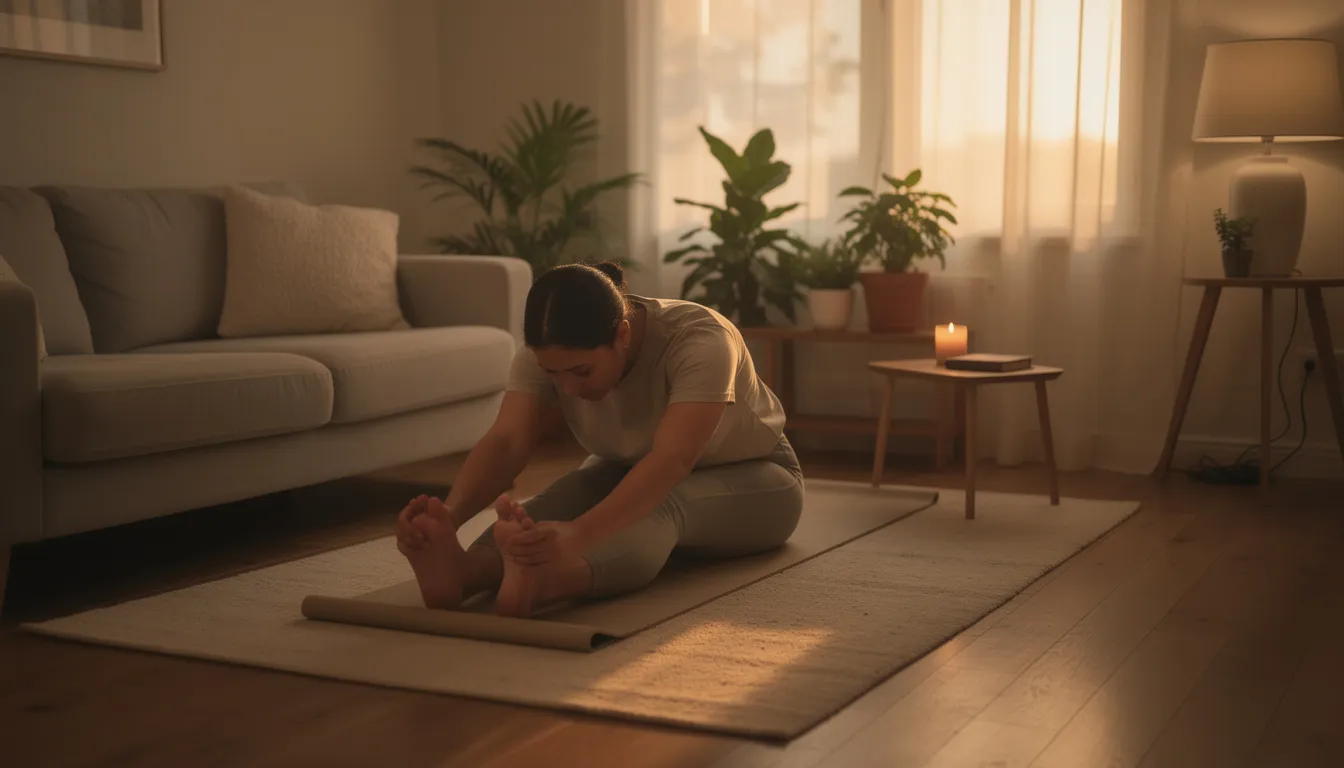
- Start dimming lights around 9pm. Use lamps, candles, or dimmed fixtures instead of bright overhead lights.
- Turn off screens—television, phone, laptop—by 9:30pm at the latest.
- Fill the evening with quieter activities:
- Fifteen minutes of gentle stretching or yoga.
- A warm shower at 9:15pm (the subsequent body temperature drop promotes sleepiness).
- Reading a paper book in bed rather than scrolling.
- Quiet music rather than late-night news.
- Make the last 30 minutes before bed completely free from work emails, banking apps, or stressful conversations.
- If something’s worrying you, write it in a sleep diary earlier in the evening rather than processing it in bed.
Example routine for a 10:30pm bedtime:
- Devices off at 9:30pm.
- Herbal tea at 9:15pm.
- Warm shower at 9:45pm.
- Light stretching for 10 minutes.
- Reading from 10:00–10:25pm.
- Lights out.
Consistency matters more than perfection. Do the same sequence most nights, and your body will learn to feel sleepy on cue.
Make Your Bedroom a Sleep-Only Zone
Your brain forms powerful associations. If you spend hours in bed watching television, scrolling social media, or working on your laptop, your brain links the bedroom with alertness rather than sleep.
Steps to implement:
- Remove screens, work papers, and anything mentally stimulating from your bedroom.
- The bed should be associated only with sleep and intimacy—nothing else.
- Create an environment that supports quality sleep:
- Keep the room cool (17–19°C is ideal for most people), dark, and quiet.
- Blackout curtains block early morning light and streetlamps.
- A sleep mask provides insurance if light still creeps in.
- Soft earplugs or a white noise app can mask city sounds or a snoring partner.
- If budget allows, invest in a supportive mattress and pillow suited to your usual sleep position.
Try an experiment:
- For one week, do absolutely no scrolling or streaming in bed. Simply read, then sleep.
- Notice whether your 2am wake-ups become shorter or less frequent.
Tame Caffeine, Alcohol and Late-Night Eating
Caffeine stays in your system far longer than most people realise. With a half-life of five to eight hours, that 4pm flat white means roughly half the caffeine remains in your bloodstream at 10pm.
Steps to follow:
- Set a practical cut-off: last coffee, tea, or energy drink by 1–2pm. If you’re particularly sensitive (and sensitivity often increases over 40), push that cut-off even earlier.
- Alcohol is trickier because it seems to help sleep initially. A glass or two of wine at 7:30pm might help you relax and drift off quickly. But alcohol suppresses deep sleep, fragments your sleep cycles, and causes rebound wakefulness as your liver processes it—typically three to four hours after your last drink.
If you enjoy evening wine, experiment with:
- Reducing quantity.
- Finishing earlier (by 6pm).
- Taking alcohol-free nights to see how your sleep responds.
Late eating also matters. Finish dinner at least three hours before bed.
- If you need an evening snack, keep it small and easily digestible—a small yoghurt, handful of nuts, piece of fruit. This minimises reflux and blood sugar fluctuations that can disrupt sleep in the early hours.

Manage Daytime Stress to Protect Night-Time Sleep
Your daytime stress levels directly affect your 2am experience. When you carry unprocessed worry to bed, your brain attempts to work through it during lighter sleep phases—often jolting you awake.
Techniques to try:
- Schedule a “worry window” earlier in the evening (between 7pm and 8pm):
- Sit down with a notebook and write out everything concerning you.
- Get it onto paper, then deliberately close the notebook and set it aside.
- Practice relaxation techniques during the day:
- Deep breathing exercises at your desk: inhale for four seconds, exhale for six seconds, repeat for five minutes.
- Progressive muscle relaxation—systematically tensing and releasing muscle groups in 10 minutes.
Add 20–30 minutes of daytime movement on most days:
- A brisk walk, cycle, or gardening session helps metabolise stress hormones and supports deeper nighttime sleep.
- If anxiety or low mood are severe or persistent, seek professional help from a GP or psychologist.
What to Do When You’re Awake at 2am
Despite your best efforts, you will sometimes find yourself awake at 2am. What you do in that moment matters enormously.
Guidelines:
- If you’ve been awake for around 20 minutes and feel wired rather than drowsy, it’s best to get out of bed.
- Avoid clock-watching, as checking the time increases anxiety and frustration when trying to return to sleep.
- If you are unable to sleep after 20 minutes, get out of bed and engage in a quiet activity in dim light.
Activities to try:
- Move to another room. Keep lights dim.
- Do something calm and non-stimulating: read a familiar book (nothing gripping), knit, do gentle stretching, listen to quiet music or an audio meditation with the screen facedown.
- No screens—the light will wake you further.
Return to bed only when you feel genuinely sleepy again.
Turn this into a 14-night plan
- Consistency is key. If you’d like structured support designed for adults 45+ to help you settle and wake clearer (without a “knockout” feel), you can start with a low-risk trial.
Over time, this approach—called stimulus control—retrains your brain to associate bed with sleep rather than struggle.
The wake-ups may not vanish immediately, but they typically become shorter and less distressing.
Remember: One night of broken sleep isn’t a disaster. Aim for gradual improvement across several weeks, not perfection tonight.
Consider Evidence-Based Nutritional Support
- Sleeping tablets can be useful short-term under medical guidance, but they’re not ideal for chronic insomnia. Many cause morning grogginess, don’t improve sleep quality (only sleep duration), and can become habit-forming, which is why a focus on lifestyle foundations with selective, research-informed supplementation is often a better long-term strategy.
- There’s another path: specific nutrients and plant-based extracts that support the body’s natural sleep mechanisms without heavy sedation.
- Certain minerals like magnesium play crucial roles in nervous system regulation and muscle relaxation.
- Specific botanical extracts have been studied for their calming effects on the brain. Natural sleep capsules featuring these ingredients use this research to support relaxation and deeper rest.
- Amino acids involved in melatonin production can gently nudge the body toward readiness for sleep.
- At Lifeguard Health, our sleep support formulations are clinician-formulated specifically for adults over 40. We focus on healthy ageing—which means supporting better sleep as one pillar of overall vitality, alongside immunity, joint health, and inflammation management.
- Our approach isn’t about knocking you out. It’s about giving your body the nutritional building blocks to regulate its own sleep more effectively, used alongside the lifestyle changes described throughout this article.
- If you’d like to explore our evidence-based sleep support range, visit our website. Free NZ shipping applies on orders over NZ$100, and you can choose one-time purchase or convenient subscription options.

When to Talk to Your Doctor About 2am Wake-Ups
Occasional 2am waking is normal and doesn’t require medical intervention. But there are times when professional input is important.
See your GP if you’re waking most nights for more than a month and it’s affecting how you function during the day.
Excessive daytime sleepiness, difficulty concentrating, irritability, and trouble staying awake while driving are all signs your sleep problems need attention.
Pay particular attention to these red flags: loud snoring, witnessed pauses in breathing, waking gasping or choking, chest pain at night, severe restless legs, drenching night sweats unrelated to room temperature, or needing the bathroom three or more times nightly.
For older adults, it’s worth mentioning sleep quality at routine check-ups even without dramatic symptoms.
Poor sleep can worsen blood pressure, blood sugar regulation, and systemic inflammation—all concerns for healthy ageing.
Your GP can screen for conditions like sleep apnea, depression, thyroid imbalance, and prostate problems.
They can also review your medications to identify any that might disrupt sleep and help create a treatment plan tailored to your situation.
Asking for help with sleep isn’t a sign of weakness. It’s a sign you’re taking your health—and your healthy ageing—seriously.
Sleeping Better in Your 40s, 50s and Beyond
Waking at 2am is common, but it’s not inevitable.
What you’re experiencing reflects a convergence of stress, habits, environment, and the natural changes of ageing—and every one of those factors can be addressed.
Consistent small changes add up.
A regular sleep schedule. A cool, dark bedroom.
Caffeine finished by early afternoon. An evening routine that signals sleep. Stress management during the day.
Knowing what to do when you do wake at night. And where appropriate, nutritional support that works with your body rather than against it.
Good sleep isn’t a luxury for older adults—it’s a foundation.
Quality sleep supports your immune system, helps your joints recover, protects your brain health, and builds emotional resilience.
It’s as important as the food you eat and the movement you build into your day.
At Lifeguard Health, we’re focused on helping New Zealanders age well.
That means addressing sleep alongside inflammation, immunity, and joint health—because they’re all connected, especially when you consider the research on inflammation and healthy ageing.
Explore our articles and resources on healthy ageing to build a complete approach.
The next time you see 2:00am glowing on the clock, you won’t need to lie there wondering what’s wrong.
You’ll have a clear plan—and the quiet confidence that comes with understanding your own sleep. Take a breath. Get up if you need to. And know that better sleep tonight, and every night, is within reach.
View the full formula + monthly plan
See ingredients, directions, and subscription details for Lifeguard Sleep (designed for adults 45+).
View Lifeguard Sleep Or start the free month trial